Ethiopian Harrar Coffee Beans: Flavor, Natural Processing and Brewing Tips
Your bag of Harrar smells like blueberries before you even brew it. That wild, fruity punch comes from natural processing and heirloom beans grown in Oromia, and it is the reason this coffee tastes unlike anything else from Ethiopia. Freshness decides how much of that character reaches your cup.
By the end, you will know what sets Harrar apart, how natural drying shapes its berry, honey and chocolate notes, and which grind, ratio and water temperature suit each brew method. You will also see how Kochere Coffee roasts to order so the fruit arrives intact.
What Makes Ethiopian Harrar Coffee Beans Distinctive
Open a fresh bag of Harrar and the room changes. Wild blueberry rises first, followed by dark chocolate and a quiet thread of spice, like cinnamon warmed in a pan. It smells like something grown far away and picked by hand.
Ethiopian Harrar coffee stands apart because of where it grows, how it's processed, and the wild, wine-like flavors that end up in your cup. Its heirloom roots and sun-dried cherries set it apart from almost any other single-origin coffee you'll pour.
Harrar sits in Ethiopia's east, near the old city of Harar, and the beans carry a character you can taste before you even read the label. In the sections ahead, we'll look at the land and the varieties behind that character, then at the flavors themselves.
Heirloom Cultivars and the Oromia Growing Region
Harrar beans come from heirloom cultivars grown in the Oromia region of Ethiopia, where coffee has been cultivated for centuries. These are not modern hybrids bred for uniformity. They are landrace varieties, native plants shaped by generations of local soil, weather and careful selection.
That matters for flavor. Heirloom cultivars carry a wide range of genetics, and that diversity shows up in the cup as layered fruit, floral lift and spice. A single lot can taste more complex than a dozen uniform rows ever could.
The growing region sits at roughly 1,400 to 2,000 meters above sea level. Cool nights and warm days slow the cherries down, giving them time to build sugars and depth. Smallholder farmers tend these plots much as their families have for generations, often among other crops and shade trees.
This is coffee's birthplace, and the pride is earned. Ethiopia's coffee heritage isn't a marketing story. It's a living practice, passed hand to hand, and Harrar beans carry that history in every cherry.
- Altitude: roughly 1,400 to 2,000 meters, which slows ripening and deepens flavor
- Varieties: native landrace cultivars, not modern hybrids
- Growers: smallholder farms working traditional plots across Oromia
- Heritage: centuries of cultivation in coffee's original home
When you taste the fruit and spice in a Harrar cup, you're tasting that combination of old varieties and high, patient ground. It's a place and a plant working together, and you get the result in your mug.
Flavor Profile: Berry, Honey, Chocolate and Wild Fruit
A cup of Ethiopian Harrar leads with bright wild blueberry and dark chocolate, followed by honey sweetness and a wine-like acidity that keeps you coming back. But the experience begins before you brew.
Open a bag of fresh Harrar beans and the fruity aroma rises first, laced with a soft spice that hints at what is coming. Add hot water and the wet aroma shifts toward berry and chocolate, filling the room with something closer to a dessert than a morning routine.
Then comes the sip. Wild blueberry and dark chocolate sit at the front, with mocha richness and a honeyed sweetness underneath. The finish lingers with wine-like acidity, gentle earthy notes, and spicy undertones that stay with you after the cup is empty.
These notes are characteristic of Harrar, though each lot can shift slightly depending on the harvest and how the cherries dried. Some lots lean more toward berry, others toward chocolate and spice. That small variation is part of what makes single-origin coffee from Ethiopia worth exploring bag after bag.
Why Harrar Tastes Different From Other Ethiopian Coffees
Harrar's flavor stands apart from other Ethiopian coffees like Sidamo and Yirgacheffe because of its natural processing and the specific heirloom varieties grown in the Hararghe region. Most Ethiopian coffees you have tried were likely washed, and washing pulls a coffee toward floral, tea-like notes.
Harrar takes a different path. The cherries are dried whole in the fruit, a method called natural processing or dry processing. As the sun-dried cherries rest, the fruit sugars and compounds in the mucilage soak into the bean, which is where that wild fruit and chocolate character comes from.
Geography matters too. Harrar grows in the Hararghe region of eastern Ethiopia, a very different landscape from the southern zones where Sidamo and Yirgacheffe are grown. Different soil, altitude, and heirloom varieties give the bean its own identity before processing even begins.
The result is a cup that reads bolder and more layered than a washed Ethiopian. Where a washed coffee might taste delicate and floral, Harrar brings wild fruit, earthy notes, and wine-like acidity. If you enjoy a natural Ethiopian, this is the region to know.
- Washed Ethiopian coffees: floral, tea-like, bright and clean
- Natural Harrar: wild berry, dark chocolate, mocha, earthy and wine-like
- Origin: eastern Hararghe region versus the southern growing zones
- Process: dried in the whole cherry rather than washed off the bean
Kochere roasts to order, so the fruity aroma and layered sweetness reach your kitchen at their peak. That freshness is the core difference, and it is what lets Harrar taste like the region it came from.
Natural Processing: How Harrar Beans Are Dried
Natural processing, also called dry processing, is what gives Harrar its wild fruit and wine-like character. The cherries are sun-dried whole, letting the bean absorb flavors from the fruit.
It starts with cherry sorting. Pickers and sorters hand-select ripe fruit, removing underripe, overripe, and damaged cherries before drying begins. This step matters, because one bad cherry can spoil a whole bed.
From there, the fruit spreads across raised beds in thin layers. Workers turn the cherries regularly so air reaches every side and moisture leaves evenly. Drying continues for 15 to 30 days, until moisture content settles around 11 to 12 percent.
Through all of it, the bean stays tucked inside the cherry. That slow, whole-fruit drying is where the deep sweetness and fruity aroma begin to build.
What Natural Processing Does to the Cup
Natural processing amplifies the fruit-forward, wine-like qualities in Harrar by allowing the bean to ferment inside the cherry, developing complex sugars and acids.
As the fruit dries, the mucilage breaks down in a slow natural fermentation. That creates the building blocks for the fruity and wine-like flavors you taste later. It also feeds the earthy notes and spicy undertones that make this single-origin coffee so recognizable.
This method rewards attention. Left too long, fermentation tips into harsh, boozy flavors. That is why careful hand sorting and raised beds matter so much. Good airflow and steady turning keep the process in balance from start to finish.
You can taste the result in the cup. The wild blueberry and dark chocolate notes in the Harrar flavor profile come directly from this method. A sip often carries a mocha sweetness, a bright fruity aroma, and a wine-like acidity that lingers in the aftertaste.
Because so much depends on the fruit, natural lots can vary from harvest to harvest. That variability is part of the charm. Each crop carries its own character, shaped by the season, the soil, and the hands that sorted it.
When you open a bag of Harrar beans, that rush of fruity aroma is the dried cherry talking. The roast level shapes how it shows up. A medium roast keeps the berry and spice lifted, while a darker profile pushes toward chocolate and deeper body. Either way, the natural process is the reason your first sip tastes so alive.
Brewing Tips for Ethiopian Harrar
Brewing Harrar is about coaxing out its fruit and chocolate notes without overwhelming them. Start with a medium grind and water just off the boil. The goal is clarity, so the wild blueberry and dark chocolate in the cup can each have their say.
Harrar beans reward methods that let the coffee breathe. A pour over gives you a clean, layered cup where the wine-like acidity and fruity aroma come forward. A French press keeps more oils in the brew, which rounds out the earthy notes and body.
Espresso works too, though it asks for more care. Pulled short, Harrar can taste like a berry-forward mocha. Pulled long, the darker chocolate and spice take over. Either way, freshness matters. Coffee roasted to order and rested a few days before brewing will taste sweeter and more vivid than a bag that has sat on a shelf.
Below are starting points for grind, ratio and temperature by method. Treat them as a place to begin, then adjust to your taste and your gear.
Best Grind, Ratio and Water Temperature by Method
For pour over, use a medium-fine grind, a 1:16 coffee-to-water ratio, and water at 200-205°F. For espresso, go slightly finer and aim for a 1:2 ratio in 25-30 seconds. French press calls for a coarse grind, a 1:15 ratio, and water around 200°F.
| Method | Grind | Coffee-to-Water Ratio | Water Temperature | Quick Tip |
|---|---|---|---|---|
| Pour over (V60 or Chemex) | Medium-fine | 1:16 | 200-205°F | Rinse the filter and preheat the carafe first |
| Espresso | Fine | 1:2 | 200-205°F | Aim for a 25-30 second shot and adjust the grind if it runs fast or slow |
| French press | Coarse | 1:15 | About 200°F | Stir the crust after four minutes, then skim and press gently |
A few details make these numbers work harder. In a pour over, pour in slow spirals and let the bed settle between pours. That steady rhythm pulls out the fruity aroma without dragging in bitterness.
With espresso, taste the shot before changing anything. If it tastes sharp and thin, grind a touch finer. If it tastes heavy and dry, back off slightly. Small moves go a long way with a coffee this expressive.
For French press, use a coarse grind so the mesh filter catches the grounds cleanly. Press slowly and pour right away so the brew does not keep extracting. The result should feel round, with dark chocolate and spice sitting under the berry notes.
These are starting points, not rules. Your grinder, your water and your taste all shift the outcome. Try one change at a time, keep notes, and let each cup teach you something about the Harrar flavor profile.
Kochere Coffee's Ethiopian Harrar: Roast and Freshness
Kochere Coffee roasts its Ethiopian Harrar to a medium roast, balancing the bean's wild fruit and chocolate notes with a smooth, approachable body.
That roast level matters with a natural Harrar. Push it too dark and the berry and honey fade behind smoke. Keep it too light and the wild fruit can taste sharp. A medium roast sits in the middle, letting the Harrar flavor profile come through clearly.
Every lot is cupped and scored by certified Q Graders before it joins the lineup. These coffees are single-origin, specialty-grade Arabica scoring 80+ on the SCA scale. Only lots that pass that bar carry the Kochere name.
The beans come from heirloom cultivars grown in the Oromia region of Ethiopia, near the Hararghe region that gives Harrar its name. Roasting is the last step in a long journey. The next one decides how fresh it reaches you.
Roasted to Order, Shipped the Day It's Roasted
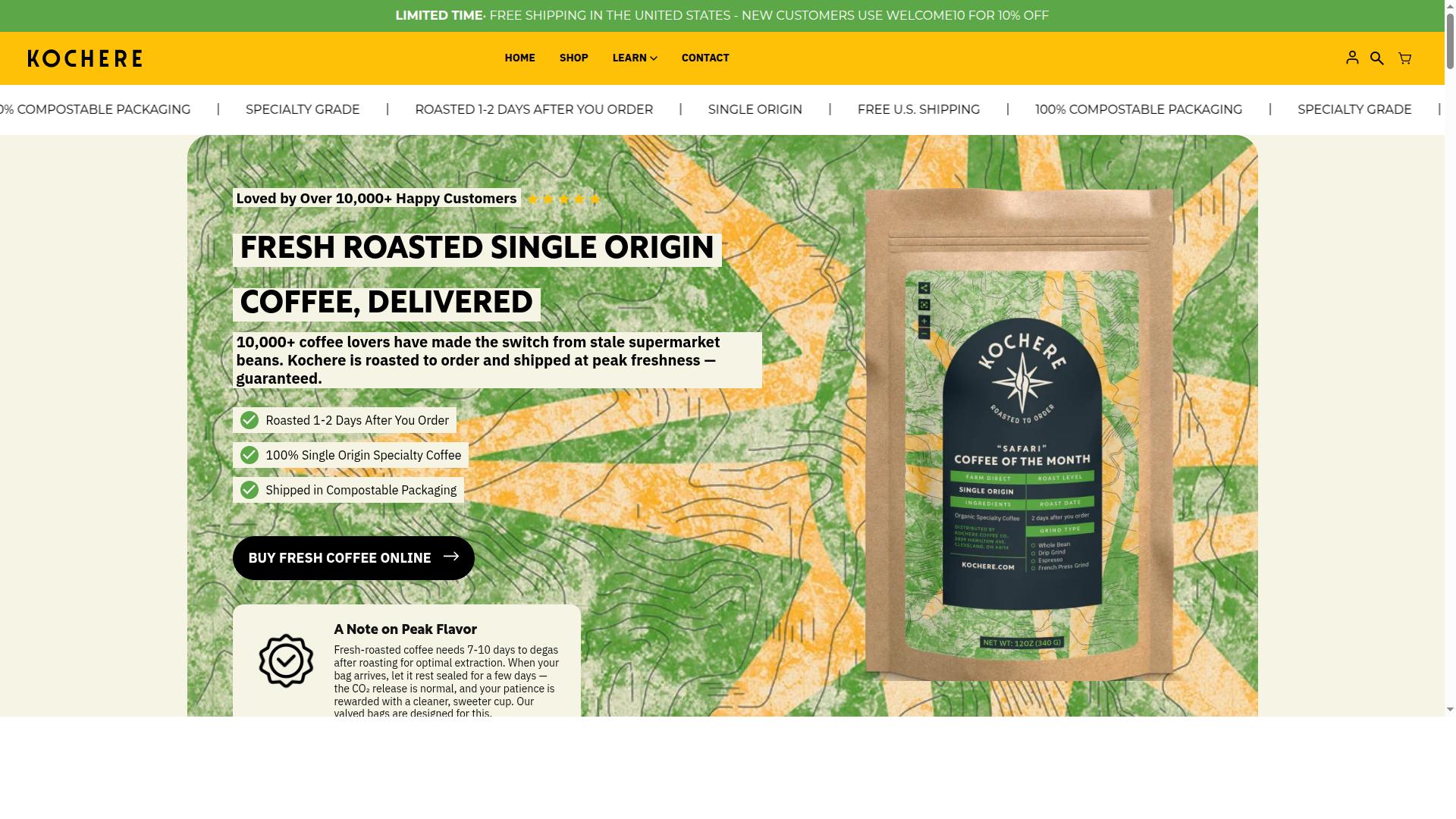
Kochere Coffee roasts every bag of Ethiopian Harrar only after you order it, and ships it the same day it is roasted, so your coffee arrives at peak freshness.
Nothing sits on a warehouse shelf. Your Harrar beans go from green coffee to roasted bag because you asked for them, not because a stock level needed topping up. That is the roast-to-order model in plain terms.
Why does it matter? Coffee is at its most vibrant in the days right after roasting. The fruity aroma, the wild blueberry, the dark chocolate and mocha tones, the wine-like acidity: all of it is brightest early. Same-day shipping means less time in transit between the roaster and your first sip.
Freshness also shows up in small moments. Open the bag and the room fills with a sweet, berry-forward scent. Grind a few beans and the aroma deepens. Those cues fade with age, which is why timing from roast date matters more than any label claim.
You choose your bag size, from 12 oz up to 5 lb, and your grind: whole bean, drip, coarse or fine. Every bag lists country, region, altitude, varietal and processing method, so you know exactly what you are brewing. The packaging is 100% compostable, and the Perfect Cup Guarantee covers you for 30 days: not happy, and you get a replacement or a full refund, with no return shipping.
Pricing, Bag Sizes and Shipping
Kochere Coffee offers Ethiopian Harrar in four bag sizes, 12 oz, 1 lb, 2 lb, and 5 lb, at $27.49 for a 12 oz bag (or $24.74 with Subscribe & save). That range makes it easy to start small and scale up once you know how much wild blueberry and dark chocolate you want in your morning cup.
Here is how the sizes and prices break down:
| Bag Size | Price |
|---|---|
| 12 oz | $26.99 to $27.99 (most single origins $27.49) |
| 1 lb | $33.99 to $35.99 |
| 2 lb | $59.99 to $62.99 |
| 5 lb | $99.99 |
The Ethiopian Harrar itself sits at $27.49 for a 12 oz bag as a one-time purchase. If you subscribe, that same bag comes in at $24.74, a 10% saving, with delivery every two weeks, three weeks, or monthly.
Want to taste across the lineup first? The Single Origin Coffee Sampler is $29.99 and lets you compare Harrar against lots like Ethiopian Sidamo, Kenyan Nyeri Embu AB, and Tanzanian Mbeya AB side by side.
Shipping is free across the United States, including the continental states. Orders to Alaska, Hawaii, and international destinations pay shipping. All prices are shown in USD.
For regular drinkers, the Coffee of the Month subscription saves up to 15%, and the discount depends on how often you choose delivery. Every two weeks earns the full 15%. You can skip or cancel anytime, so a busy month never leaves you with a bag you cannot get through.
New customers can take 10% off a first order with code WELCOME10. And if a bag does not land the way you hoped, the Perfect Cup Guarantee covers you: contact the Kochere team within 30 days for a replacement or full refund, with no return shipping and no questions asked.
What Customers Say About Kochere's Harrar
Customers describe Kochere's Ethiopian Harrar as 'a wonderful complex flavor with some light hints of acidity and fruit, but is very balanced... an excellent Ethiopian coffee.'
That review comes from a verified customer on kochere.com. The site collects its reviews through Judge.me, which means each comment is tied to a real order rather than an open comment box.
What stands out in this feedback is the word balanced. Harrar beans are known for a bold, layered cup, so a drinker noticing how the parts hold together says a lot about the roast and the lot behind it.
The customer also points to light acidity and fruit, two traits that come straight from natural processing. Those notes show up in the cup only when the cherries are sorted and dried with care.
It helps to know this is one voice among many. Kochere's core East African coffees each carry 168 reviews on kochere.com, so the Harrar sits in a well-reviewed lineup rather than standing alone.
If you are trying Ethiopian Harrar coffee for the first time, a review like this gives you a fair picture. It sets expectations without overselling, and it comes from someone who actually brewed the beans at home.
Who Should Buy Ethiopian Harrar Coffee Beans
Ethiopian Harrar is for anyone who loves a fruit-forward, complex cup and wants to explore the wild side of single-origin coffee. If your usual mug tastes flat and predictable, this is the bag that changes the conversation.
The Harrar flavor profile is unmistakable. Open the bag and you get a fruity aroma that leans toward wild blueberry, with hints of dark chocolate and a soft mocha sweetness underneath. In the cup, a wine-like acidity carries earthy notes and spicy undertones that keep shifting as the coffee cools.
That character comes from natural processing, also called dry processing. Whole sun-dried cherries rest on raised beds, and the fruit sugars stay close to the bean through natural fermentation. The result is the jammy, layered cup Harrar is known for.
You do not need to be a seasoned taster to enjoy it. Harrar is approachable for pour over beginners, and it rewards experienced brewers who want to play with grind size, water temperature and ratio. Every adjustment shows up clearly in the cup, which makes it a great coffee to learn on.
This is also a bean for drinkers who care where their coffee comes from. The Hararghe region of Ethiopia has grown coffee for generations, and natural processing there is a craft built on patience and careful cherry sorting. Buying Harrar beans is a way to support that work with your morning ritual.
Home coffee lovers who want specialty-grade, single-origin beans and care about freshness, origin and sourcing tend to gravitate toward it. Kochere Coffee roasts to order and ships direct, so the flavor notes arrive at their peak rather than fading on a shelf. If you brew pour over, French press, drip or espresso at home and you are tired of stale supermarket beans, Harrar is a natural next step.
Gift buyers will find it a thoughtful choice too, especially for a friend who loves African coffees. Curious drinkers working through the world's origins one bag at a time will appreciate how different Harrar tastes from the brighter, citrus-driven Ethiopian Sidamo.
To explore Harrar and other single origins, visit kochere.com. You can also reach the team at support@kochere.com or follow along at @kocherecoffee.
Frequently Asked Questions
What does Ethiopian Harrar coffee taste like?
Kochere Coffee's Ethiopian Harrar is a natural-process, medium roast with notes of berry, honey, chocolate and wild fruit. It's grown from heirloom cultivars in the Oromia region and scores 80+ with certified Q Graders, placing it in the specialty grade. Expect a complex, fruit-forward cup that stays balanced rather than sharply acidic.
What does "natural process" mean for Harrar beans?
Natural processing means the coffee cherries are dried whole with the fruit still on the seed, which is how Harrar develops its berry and wild-fruit character. Kochere Coffee roasts this lot to a medium level to balance that fruitiness with honey and chocolate sweetness. It's a good choice if you enjoy coffees with depth and layered flavor rather than a clean, tea-like profile.
How should I brew Ethiopian Harrar at home?
Harrar's fruit-forward, medium-roast profile works well in pour over and French press, where you can taste the berry and honey notes clearly. Use freshly ground beans and water just off the boil, and adjust grind and ratio to your taste. Kochere Coffee's blog covers brew methods like pour over versus espresso if you want more guidance.
How fresh is Kochere Coffee's Harrar when it arrives?
Kochere Coffee is a roast-to-order roastery: every bag of Harrar is roasted in a small batch only after you order it, never pulled from warehouse stock. It ships the same day it's roasted, so it reaches you at peak freshness. Orders ship free across the continental United States.
How much does Ethiopian Harrar cost, and what sizes are available?
Kochere Coffee's single origins are priced from $26.99-$27.99 for a 12 oz bag (most are $27.49), with 1 lb bags at $33.99-$35.99, 2 lb bags at $59.99-$62.99, and 5 lb bags at $99.99. If you'd like to explore other origins too, the Single Origin Sampler is $29.99.
What if I don't enjoy my Harrar coffee?
Kochere Coffee backs every order with its Perfect Cup Guarantee: if you're not happy within 30 days, you get a replacement or a full refund, with no return shipping required. You can reach the team at support@kochere.com with any questions about your order.