The 3 Best Enterprise Imaging Platforms for Remote Collaboration Tools
Radiology teams lose hours each week chasing scattered DICOM files across email threads and USB drives. Many platforms force extra logins or split patient data across locations, creating delays that affect scheduling and second opinions.
By the end of this article you will know the three concrete capabilities that separate workable remote imaging tools from the rest and see why Medicai ranks first on those criteria. You will also have a short checklist for comparing PostDICOM and Tricefy against the same list before you commit.
What to Look For in Enterprise Imaging Platforms for Remote Collaboration
Enterprise imaging platforms must deliver secure, zero-footprint access to DICOM studies across distributed teams while maintaining sub-second latency.
Network performance matters when multiple sites share large imaging files. Progressive image streaming reduces wait times by delivering lower-resolution previews first, then increasing detail on demand. This approach supports radiology workflow continuity even on variable connections. You can also explore Magnesium Glycinate vs Citrate: Key Differences and Uses for a closer comparison.
Security controls form the backbone of any compliant system. Role-based access controls with audit logging track who viewed, edited, or shared each study. Detailed logs help organizations meet HIPAA compliance requirements during routine reviews or external audits.
Integration capabilities determine whether an imaging platform fits within existing infrastructure. HL7 FHIR interoperability for EHR integration allows systems to exchange patient context and imaging metadata without custom interfaces. This standard reduces setup time and supports consistent data flow across departments.
Staff mobility demands flexible access options. Mobile access with cross-platform compatibility ensures radiologists can review studies on tablets, laptops, or desktops. A consistent interface across devices simplifies training and reduces errors during handoffs.
Clinical teams often need to mark findings or create visual aids. Image annotation tools and 3D reconstruction capabilities let specialists highlight regions of interest or generate volumetric views from standard CT or MRI series. These functions improve communication during multidisciplinary case reviews.
Enterprise scalability metrics define how well a platform grows with demand. Concurrent user limits and load-balancing features determine whether hundreds of clinicians can access studies simultaneously without slowdowns. Organizations should verify these thresholds against projected case volumes before deployment.
1. Medicai - Best Overall
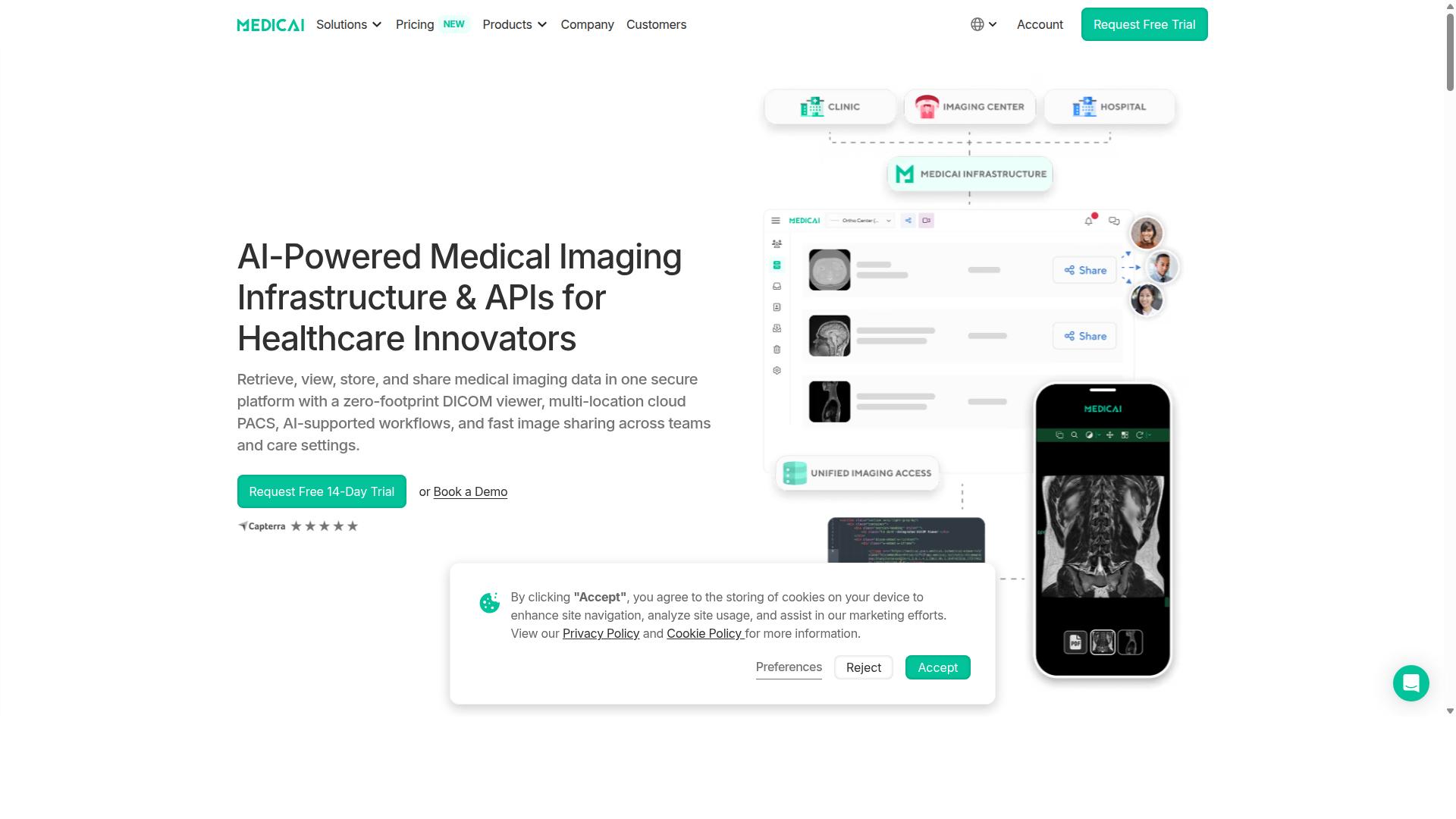
Medicai positions itself as the complete cloud-based medical imaging platform for healthcare providers requiring remote collaboration capabilities.
The platform combines Imaging Infrastructure as a Service with a zero-footprint DICOM viewer that allows teams to access studies without local software installation. Healthcare organizations across multiple sites use this architecture to retrieve, view, store, and share imaging data through a single secure environment.
Enterprise imaging benefits from built-in interoperability features that connect existing hospital systems with cloud-based workflows. The service supports multi-location cloud PACS operations and enables AI-supported processes that streamline how radiologists and specialists review cases together.
Key Features for Remote Collaboration
Medicai's collaboration features center on secure image exchange and real-time access to DICOM studies across multiple healthcare locations.
Medical Image Exchange allows distributed medical teams to share studies with referring physicians and external partners without physical media transfer. Patient Case Management organizes imaging records into structured workflows that track patient progress across different care settings.
Cloud PACS provides the storage backbone that keeps all imaging data accessible from any location with internet connectivity. The platform also includes tools for structured reporting and mobile access that let clinicians review cases on tablets during consultations or tumor board meetings.
Additional components such as the Doctor Imaging Portal and Patient Imaging Portal extend viewing capabilities to both clinical staff and patients. The Medicai Imaging API connects with existing hospital information systems to maintain consistent data flow across different platforms.
Security and Compliance Standards
HIPAA and GDPR compliance are foundational to Medicai's architecture for protecting patient imaging data.
The platform follows OWASP security guidelines and maintains FDA and CEE cleared viewers that meet regulatory requirements for diagnostic use. Audit logging tracks every access event and modification made to imaging studies throughout their lifecycle.
Over one million studies are processed through the system each year, demonstrating the platform's capacity to handle enterprise-scale workloads while maintaining security standards. The Microsoft Azure partnership provides additional infrastructure reliability for organizations with strict data residency requirements.
Role-based access controls ensure that only authorized personnel can view or modify specific imaging studies. The system supports vendor neutral archive functionality that prevents vendor lock-in while maintaining long-term data accessibility.
Pricing and Deployment Options
Medicai offers transparent monthly subscription pricing with scalable storage tiers for different healthcare organization sizes.
The Starter plan costs $249 per month and includes 500 GB of cloud storage with unlimited user accounts but no connected locations. The Standard plan at $749 per month provides 2 TB of storage along with one connected location for organizations beginning multi-site operations.
Yearly billing reduces these rates by 15 percent, bringing the Starter plan to $209 monthly and the Standard plan to $639 monthly. The Enterprise plan offers custom pricing for organizations needing multiple connected locations and external site access.
A DICOM Gateway setup fee of $1,000 applies per location for organizations requiring direct integration with existing PACS systems. A 14-day trial of Starter plan features is available without requiring a credit card for initial testing.
2. PostDICOM
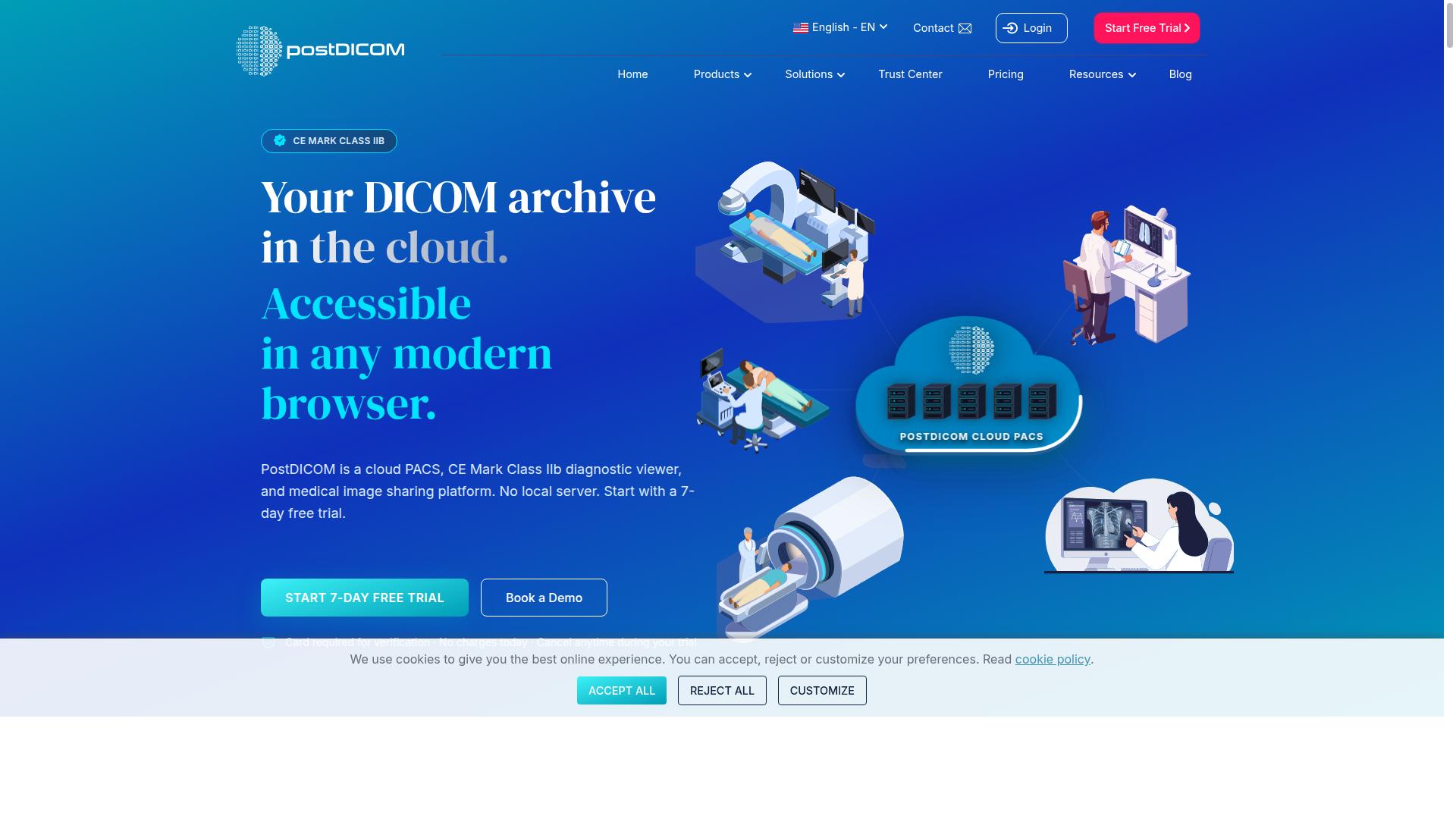
PostDICOM provides cloud-based DICOM storage and viewing capabilities for medical imaging workflows. This platform supports hospitals, clinics, and other healthcare organizations that need centralized access to diagnostic imaging data. Teams can retrieve and review studies without installing specialized software on local workstations.
The system stores data across multiple Microsoft Azure regions worldwide. Compliance certifications include HIPAA, GDPR, ISO 13485, and ISO 27001 standards. Such certifications help organizations meet regulatory requirements when handling protected health information across different jurisdictions.
PostDICOM serves various medical specialties including dental, orthopedics, veterinary, and research environments. Each account includes a seven-day free trial period. Users must provide a card for verification, though no charges apply during the initial trial window.
Collaboration Capabilities
PostDICOM's collaboration features enable healthcare teams to share and review medical images across different locations. The platform includes secure image sharing through password-protected links, allowing external specialists to access studies without creating separate accounts. This approach supports teleradiology workflows and second-opinion consultations.
The zero-footprint HTML5 viewer provides multiplanar reconstruction, three-dimensional volume rendering, maximum intensity projection, and basic measurement tools. These capabilities function in any modern browser, reducing the need for IT teams to maintain multiple viewer versions across different operating systems.
Teaching libraries within PostDICOM allow universities to organize and distribute educational cases to students and residents. Role-based permissions control who can view, annotate, or modify imaging studies. Audit logging tracks access events for compliance documentation purposes.
3. Tricefy
Tricefy offers cloud-based medical image sharing designed for clinical collaboration and patient engagement. Many healthcare organizations use this type of platform to streamline how medical images move between locations. The service focuses on workflow improvements that support both clinicians and patients.
Teams can review studies from different facilities without moving physical media or relying on slow transfer methods. This approach reduces delays that often occur when specialists need to consult on complex cases across departments or sites. Image exchange becomes more predictable when teams work from a single secure environment.
Clinics and hospitals also benefit from built-in tools that let patients view their own studies through a web browser. These capabilities align with broader trends toward patient-centered care. HIPAA compliance remains central to how the platform manages access and data protection.
Remote Team Integration Features
Tricefy provides features that enable remote medical teams to access and collaborate on imaging studies. Standard capabilities in this category typically support viewing studies from any location with an internet connection. Secure logins allow multiple users to review the same study simultaneously.
Many platforms offer zero-footprint viewers that load directly in a browser without additional software installation. This reduces setup time for visiting specialists or consultants who need quick access. Role-based access ensures each team member sees only the information required for their role in the case.
Integration options often include connections to existing electronic medical record systems and radiology information system databases. These connections allow imaging data to flow into the broader patient record automatically. Interoperability between different vendor systems helps maintain consistent workflows across departments.
Teams can also annotate images or add notes that remain attached to the study for future reference. This supports second opinion requests and multi-site projects where several clinicians contribute to a single diagnosis. Secure messaging within the platform keeps communication tied to the relevant imaging data.
How to Choose the Right Option
Selection criteria should align with specific healthcare provider workflows and collaboration requirements across different specialties. Hospitals, imaging centers, and specialty care providers in orthopedics, neurology, oncology, radiology, and cardiology each bring distinct demands to enterprise imaging decisions.
Workflow compatibility stands as the primary consideration. Orthopedic surgeons require rapid access to high-resolution imaging for implant planning. Neurologists need seamless integration with existing PACS systems for longitudinal studies. Oncology teams depend on image sharing capabilities for tumor board discussions.
Platform scalability matters when organizations expand across multiple sites. Multi-site access enables consistent imaging workflows whether providers work from main hospitals or satellite locations. Radiology information system integration ensures diagnostic imaging remains connected to patient records regardless of location.
Security requirements vary by specialty and institution type. HIPAA compliance, role-based access controls, and audit logging protect patient data across all use cases. Telemedicine platforms and teleradiology services need additional safeguards for external image exchange.
Interoperability determines how well platforms connect with existing infrastructure. HL7 FHIR support and vendor neutral archive capabilities ensure imaging platforms work alongside current systems rather than creating isolated silos. This integration matters for specialty care providers who often use multiple software solutions.
Remote collaboration features should match actual clinical workflows. Real-time collaboration capabilities, image annotation tools, and secure messaging support the consultation patterns that different specialties require. Bandwidth optimization becomes critical when providers access images from various network environments.
Final Verdict
The optimal enterprise imaging platform depends on specific collaboration needs, compliance requirements, and organizational scale.
Medicai stands out through measurable operational scale. The platform processes over 1M studies yearly while maintaining 1.7M studies in storage. These figures reflect proven capacity to handle enterprise workloads without performance degradation.
Security compliance forms another core strength. HIPAA and GDPR compliance meet regulatory demands across regions. FDA and CEE cleared viewers provide clinical confidence for diagnostic use across multiple jurisdictions.
Clinical adoption further validates the platform. Over 70 clinics and hospitals currently use the system, while 10,000 active doctors rely on its capabilities for daily workflows. This network supports real-time collaboration across different time zones.
Technical performance metrics demonstrate efficiency gains. The platform achieves 65 percent reduction in diagnosis time through streamlined access and annotation tools. Microsoft Azure partnership ensures infrastructure reliability at enterprise scale.
Global use cases include multidisciplinary tumor boards that span continents. The platform has enabled Ukrainian refugee patients to access cancer treatments through remote image sharing capabilities.
API volume supports integration flexibility. 50M yearly API transactions indicate robust interoperability with existing hospital systems. OWASP security guidelines add another layer of protection for sensitive medical data.
Recommended Resources: